 ee4ccec190
* First glance doc changes

* Apply suggestions from code review

Co-authored-by: Tatiana Savina <tatiana.savina@intel.com>

* Update docs/MO_DG/prepare_model/convert_model/Convert_Model_From_TensorFlow_Lite.md

Co-authored-by: Tatiana Savina <tatiana.savina@intel.com>

---------

Co-authored-by: Tatiana Savina <tatiana.savina@intel.com>
9.7 KiB
Install OpenVINO™ Runtime on macOS from an Archive File
@sphinxdirective
With the OpenVINO™ 2022.3 release, you can download and use archive files to install OpenVINO Runtime. The archive files contain pre-built binaries and library files needed for OpenVINO Runtime, as well as code samples.
Installing OpenVINO Runtime from archive files is recommended for C++ developers. If you are working with Python, the PyPI package has everything needed for Python development and deployment on CPU and GPUs. Visit the :doc:Install OpenVINO from PyPI <openvino_docs_install_guides_installing_openvino_pip> page for instructions on how to install OpenVINO Runtime for Python using PyPI.
See the Release Notes <https://software.intel.com/en-us/articles/OpenVINO-RelNotes>__ for more information on updates in the latest release.
.. note::
Since the OpenVINO™ 2022.1 release, the following development tools: Model Optimizer, Post-Training Optimization Tool, Model Downloader and other Open Model Zoo tools, Accuracy Checker, and Annotation Converter can be installed via pypi.org <https://pypi.org/project/openvino-dev/>__ only.
.. tab:: System Requirements
| Full requirement listing is available in:
| System Requirements Page <https://www.intel.com/content/www/us/en/developer/tools/openvino-toolkit/system-requirements.html>__
.. tab:: Software Requirements
CMake 3.13 or higher <https://cmake.org/download/>__ (choose "macOS 10.13 or later"). Add/Applications/CMake.app/Contents/binto path (for default install).Python 3.7 - 3.11 <https://www.python.org/downloads/mac-osx/>__ (choose 3.7 - 3.11). Install and add to path.- Apple Xcode Command Line Tools. In the terminal, run
xcode-select --installfrom any directory - (Optional) Apple Xcode IDE (not required for OpenVINO™, but useful for development)
Installing OpenVINO Runtime ###########################
Step 1: Install OpenVINO Core Components ++++++++++++++++++++++++++++++++++++++++
-
Open a command prompt terminal window.
-
Create the
/opt/intelfolder for OpenVINO by using the following command. If the folder already exists, skip this command... code-block:: sh
sudo mkdir /opt/intel
.. note::
The
/opt/intelpath is the recommended folder path for installing OpenVINO. You may use a different path if desired. -
Browse to the current user's
Downloadsfolder:.. code-block:: sh
cd <user_home>/Downloads
-
Download the
OpenVINO Runtime archive file for macOS <https://storage.openvinotoolkit.org/repositories/openvino/packages/2022.3/macos/>__, extract the files, rename the extracted folder and move it to the desired path:.. tab:: x86, 64-bit
.. code-block:: sh
  curl -L https://storage.openvinotoolkit.org/repositories/openvino/packages/2022.3/macos/m_openvino_toolkit_macos_10_15_2022.3.0.9052.9752fafe8eb_x86_64.tgz --output openvino_2022.3.0.tgz
  tar -xf openvino_2022.3.0.tgz
  sudo mv m_openvino_toolkit_macos_10_15_2022.3.0.9052.9752fafe8eb_x86_64 /opt/intel/openvino_2022.3.0
.. tab:: ARM, 64-bit
.. code-block:: sh
curl -L https://storage.openvinotoolkit.org/repositories/openvino/packages/2022.3/macos/m_openvino_toolkit_macos_11_0_2022.3.0.9052.9752fafe8eb_arm64.tgz --output openvino_2022.3.0.tgz tar -xf openvino_2022.3.0.tgz sudo mv m_openvino_toolkit_macos_11_0_2022.3.0.9052.9752fafe8eb_arm64 /opt/intel/openvino_2022.3.0 -
For simplicity, it is useful to create a symbolic link as below:
.. code-block:: sh
sudo ln -s openvino_2022.3.0 openvino_2022
.. note::
If you have already installed a previous release of OpenVINO 2022, a symbolic link to the
openvino_2022folder may already exist. Unlink the previous link withsudo unlink openvino_2022, and then re-run the command above.
Congratulations, you finished the installation! The /opt/intel/openvino_2022 folder now contains the core components for OpenVINO. If you used a different path in Step 2, you will find the openvino_2022 folder there. The path to the openvino_2022 directory is also referred as <INSTALL_DIR> throughout the OpenVINO documentation.
Step 2: Configure the Environment +++++++++++++++++++++++++++++++++
You must update several environment variables before you can compile and run OpenVINO applications. Open a terminal window and run the setupvars.sh script as shown below to temporarily set your environment variables. If your <INSTALL_DIR> is not /opt/intel/openvino_2022, use the correct one instead.
.. code-block:: sh
source /opt/intel/openvino_2022/setupvars.sh
If you have more than one OpenVINO™ version on your machine, you can easily switch its version by sourcing the setupvars.sh of your choice.
.. note::
The above command must be re-run every time you start a new terminal session. To set up macOS to automatically run the command every time a new terminal is opened, open ~/.zshrc in your favorite editor and add source /opt/intel/openvino_2022/setupvars.sh after the last line. Next time when you open a terminal, you will see [setupvars.sh] OpenVINO™ environment initialized. Changing ~/.zshrc is not recommended when you have multiple OpenVINO versions on your machine and want to switch among them.
The environment variables are set. Continue to the next section if you want to download any additional components.
Step 3 (Optional): Install Additional Components ++++++++++++++++++++++++++++++++++++++++++++++++
OpenVINO Development Tools is a set of utilities for working with OpenVINO and OpenVINO models. It provides tools like Model Optimizer, Benchmark Tool, Post-Training Optimization Tool, and Open Model Zoo Downloader. If you install OpenVINO Runtime using archive files, OpenVINO Development Tools must be installed separately.
See the :doc:Install OpenVINO Development Tools <openvino_docs_install_guides_install_dev_tools> page for step-by-step installation instructions.
OpenCV is necessary to run demos from Open Model Zoo (OMZ). Some OpenVINO samples can also extend their capabilities when compiled with OpenCV as a dependency. To install OpenCV for OpenVINO, see the instructions on GitHub <https://github.com/opencv/opencv/wiki/BuildOpenCV4OpenVINO>__.
What's Next? ####################
Now that you've installed OpenVINO Runtime, you're ready to run your own machine learning applications! Learn more about how to integrate a model in OpenVINO applications by trying out the following tutorials.
.. tab:: Get started with Python
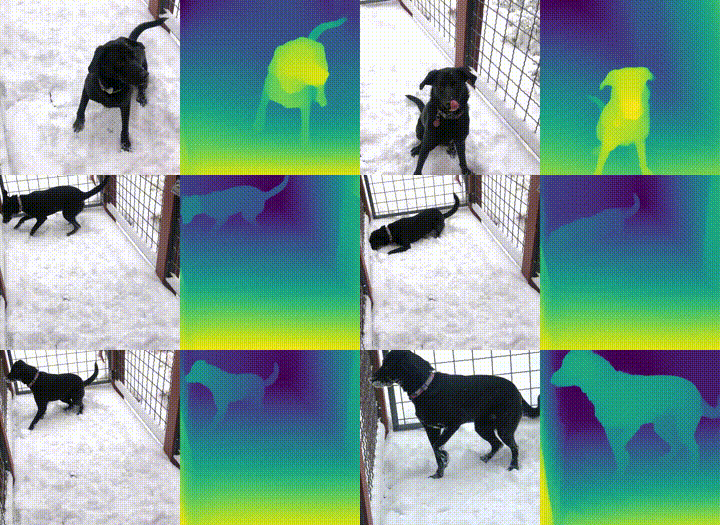
Try the Python Quick Start Example <https://docs.openvino.ai/nightly/notebooks/201-vision-monodepth-with-output.html>_ to estimate depth in a scene using an OpenVINO monodepth model in a Jupyter Notebook inside your web browser.
.. image:: https://user-images.githubusercontent.com/15709723/127752390-f6aa371f-31b5-4846-84b9-18dd4f662406.gif :width: 400
Visit the :ref:Tutorials <notebook tutorials> page for more Jupyter Notebooks to get you started with OpenVINO, such as:
OpenVINO Python API Tutorial <https://docs.openvino.ai/nightly/notebooks/002-openvino-api-with-output.html>_Basic image classification program with Hello Image Classification <https://docs.openvino.ai/nightly/notebooks/001-hello-world-with-output.html>_Convert a PyTorch model and use it for image background removal <https://docs.openvino.ai/nightly/notebooks/205-vision-background-removal-with-output.html>_
.. tab:: Get started with C++
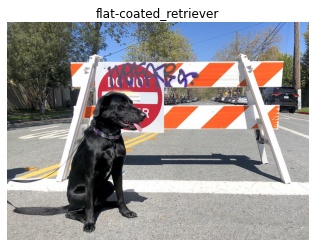
Try the C++ Quick Start Example <openvino_docs_get_started_get_started_demos.html>_ for step-by-step instructions on building and running a basic image classification C++ application.
.. image:: https://user-images.githubusercontent.com/36741649/127170593-86976dc3-e5e4-40be-b0a6-206379cd7df5.jpg :width: 400
Visit the :ref:Samples <code samples> page for other C++ example applications to get you started with OpenVINO, such as:
Basic object detection with the Hello Reshape SSD C++ sample <openvino_inference_engine_samples_hello_reshape_ssd_README.html>_Automatic speech recognition C++ sample <openvino_inference_engine_samples_speech_sample_README.html>_
Uninstalling Intel® Distribution of OpenVINO™ Toolkit #####################################################
To uninstall the toolkit, follow the steps on the :doc:Uninstalling page <openvino_docs_install_guides_uninstalling_openvino>.
Additional Resources ####################
OpenVINO Installation Selector Tool <https://www.intel.com/content/www/us/en/developer/tools/openvino-toolkit/download.html>__- :ref:
Troubleshooting Guide for OpenVINO Installation & Configuration <troubleshooting guide for install> - Converting models for use with OpenVINO™: :ref:
Model Optimizer User Guide <deep learning model optimizer> - Writing your own OpenVINO™ applications: :ref:
OpenVINO™ Runtime User Guide <deep learning openvino runtime> - Sample applications: :ref:
OpenVINO™ Toolkit Samples Overview <code samples> - Pre-trained deep learning models: :ref:
Overview of OpenVINO™ Toolkit Pre-Trained Models <model zoo> - IoT libraries and code samples in the GitHUB repository:
Intel® IoT Developer Kit <https://github.com/intel-iot-devkit>__
@endsphinxdirective